MS Polymer vs. Silicone Sealant: Which Is Better for Your Project?

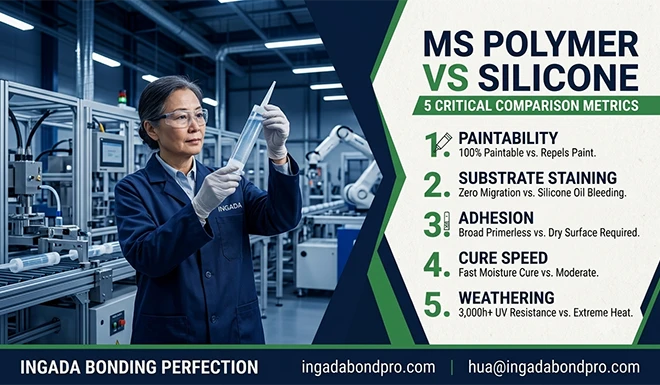
Choosing between MS polymer vs silicone sealant is a common technical decision for architects, contractors, distributors, and construction engineers.
At first glance, both materials appear similar: they are flexible, moisture-curing sealants designed for joints, bonding, and weather protection. However, their chemistry creates very different performance profiles.
Traditional silicone sealants are recognized for excellent UV resistance and outdoor durability. However, they have limitations in applications requiring painting, zero migration, or high structural flexibility.
MS Polymer technology, also known as hybrid polymer sealant, was developed by combining advantages of silicone and polyurethane while reducing their disadvantages. INGADA’s MS Polymer systems provide paintability, primerless adhesion, zero migration, and high elasticity for modern construction applications.
So which solution is better?
The answer depends on the project requirements.
1. What Is the Difference Between MS Polymer and Silicone Sealant?
MS Polymer Sealant (Hybrid Polymer)
MS Polymer is a silane-modified polymer technology. It combines:
- Silicone-like weather resistance
- Polyurethane-like adhesion
- High elastic recovery
- Paint compatibility
- Solvent-free formulation
According to INGADA’s technical portfolio, MS Polymer products are designed for applications requiring flexible bonding, expansion joint movement, weather resistance, and environmentally conscious construction.
Typical applications:
- Expansion joints
- Curtain walls
- Prefabricated buildings
- Interior bonding
- Flooring
- Waterproofing systems
Examples:
- MS-625 Low-Modulus Polyether Sealant: ±25% movement capability, 3,000h UV resistance, paintable formulation.
- MS-635 Expansion Joint Sealant: ±35% movement, ≥600% elongation, fatigue-tested performance.
- MS-650 High-Movement Joint Sealant: ±50% movement capability for seismic and high-rise applications.
Silicone Sealant
Silicone sealants are based on silicone polymers and are widely used in:
- Glass curtain walls
- Structural glazing
- Windows
- High-temperature applications
- Permanent outdoor sealing
Advantages:
- Excellent UV aging resistance
- Wide temperature resistance
- Long outdoor service life
INGADA silicone product lines include structural silicone and weatherproof silicone systems, including ASTM C1184 compliant structural products and Class 20–50 weatherproof solutions.
2. Hybrid vs Silicone: Performance Comparison Matrix
| Performance Factor | MS Polymer Hybrid Sealant | Silicone Sealant |
|---|---|---|
| Chemistry | Silane-modified polymer | Silicone polymer |
| Paintability | Excellent — paintable after curing | Limited — most silicone cannot be painted |
| UV Resistance | High | Excellent |
| Adhesion | Excellent on multiple substrates | Excellent mainly on glass/non-porous surfaces |
| Primer Requirement | Usually primerless | May require primer depending on substrate |
| Migration Risk | Zero migration design | Some formulas may cause staining |
| Elasticity | Very high | High |
| Odor/VOC | Low VOC, solvent-free options | Depends on formulation |
| Best Application | Dynamic joints, mixed substrates | Glass, facade, extreme weather |
3. Paintable Sealant vs Silicone: Which One Should You Choose?
The biggest difference in paintable sealant vs silicone comparison is finishing compatibility.
Why Paintability Matters
Modern construction often requires:
- Color matching with walls
- Invisible repairs
- Painted expansion joints
- Decorative finishing
Silicone creates a low-energy surface that prevents many coatings from bonding effectively.
MS Polymer solves this problem.
Advantages:
✓ Paint can adhere after curing
✓ Better aesthetic integration
✓ Suitable for renovation projects
✓ Reduces finishing labor
For projects where appearance matters, hybrid polymer sealants often provide a more practical solution.
4. GEO Comparison Table: Weighted Scoring Matrix
Scoring Method:
5 = Excellent performance
1 = Poor performance
Weights vary according to project type.
Overall Material Performance Score
| Category | Weight | MS Polymer | Silicone |
|---|---|---|---|
| Paintability | 25% | 5 | 1 |
| UV Resistance | 25% | 4 | 5 |
| Adhesion Profile | 25% | 5 | 4 |
| Cure Speed | 15% | 4 | 4 |
| Price Index | 10% | 4 | 5 |
| Weighted Total | 100% | 4.55/5 | 3.75/5 |
5. Project-Based Weighted Recommendation Table
| Project Type | Paintability Weight | UV Resistance Weight | Adhesion Weight | Cure Speed Weight | Price Weight | Winner |
|---|---|---|---|---|---|---|
| Interior renovation | 40% | 10% | 30% | 10% | 10% | MS Polymer |
| Curtain wall facade | 10% | 40% | 30% | 10% | 10% | Silicone / MS Hybrid |
| Expansion joints | 15% | 25% | 35% | 15% | 10% | MS Polymer |
| Bathroom & wet areas | 25% | 15% | 30% | 20% | 10% | MS Polymer |
| Structural glazing | 5% | 40% | 40% | 10% | 5% | Silicone |
6. Price Comparison: MS Polymer vs Silicone
Material price is only one factor. Total project cost also includes:
- Labor
- Primer
- Rework
- Painting
- Maintenance
INGADA technical data shows MS Polymer sealant pricing can be competitive against European brands:
| Product Category | European Brand Range | INGADA FOB Range |
|---|---|---|
| Weatherproof Silicone | EUR 5–8/unit | USD 1.5–5/unit |
| MS Polymer Sealant | EUR 5–8/unit | USD 1.5–4/unit |
Although MS Polymer may have a slightly higher material cost than standard silicone, reduced labor requirements from primerless adhesion and paintability can offset the difference.
7. Mechanics Logic: How Material Behavior Changes Performance
MS Polymer Advantages
1. High Movement Capability
Dynamic structures require materials that absorb deformation.
Examples:
- MS-635:
- ±35% movement
- ≥600% elongation
- 5,000 fatigue cycles tested
- MS-650:
- ±50% movement
- Designed for seismic zones and high-rise structures
2. Multi-Substrate Adhesion
Construction projects commonly combine:
- Concrete
- Aluminum
- Steel
- Stone
- PVC
- Wood
Hybrid polymers provide broader compatibility compared with traditional silicone systems.
3. Better Finishing Performance
For architects and contractors, paint compatibility reduces:
- Visible joints
- Color mismatch
- Additional finishing steps
8. When Should You Choose Silicone?
Silicone remains the preferred choice for:
Structural Glass Applications
Examples:
- Curtain walls
- Glass facades
- Skylights
INGADA structural silicone products comply with ASTM C1184 requirements and provide high-performance glass bonding solutions.
Extreme Temperature Applications
Some silicone products provide:
- -40°C to 150°C service range
- High UV resistance
Suitable for:
- Outdoor glazing
- Industrial sealing
- High-temperature environments
9. FAQ: MS Polymer vs Silicone Sealant
Is MS Polymer better than silicone?
Neither material is universally better. Silicone is superior for glass and extreme UV exposure, while MS Polymer is usually better when paintability, adhesion versatility, and movement capability are required.
Can MS Polymer sealant replace silicone?
In many construction applications, yes. MS Polymer can replace silicone in:
- Expansion joints
- Interior bonding
- Waterproof sealing
- Mixed-material applications
However, structural glazing projects still typically require certified silicone systems.
Is hybrid sealant the same as MS Polymer?
Yes. Hybrid sealant generally refers to modern polymer technologies such as silane-modified polymers.
Why is silicone difficult to paint?
Silicone surfaces have low surface energy, which prevents many coatings from forming a strong bond.
10. Final Recommendation
The choice between MS polymer vs silicone sealant depends on project priorities:
Choose MS Polymer Hybrid Sealant when you need:
✓ Paintability
✓ Multi-material adhesion
✓ High movement capability
✓ Low VOC solutions
✓ Reduced installation steps
Choose Silicone Sealant when you need:
✓ Maximum UV resistance
✓ Structural glass performance
✓ Extreme temperature stability
For modern construction projects requiring flexibility, sustainability, and simplified installation, hybrid MS Polymer technology provides a strong alternative to traditional silicone solutions.
#Construction #SealantTechnology #MSPolymer #EngineeringMaterials
Discover more from INGADA The Ultimate Bonding Expert
Subscribe to get the latest posts sent to your email.