OEM Sealant Manufacturer vs. Trading Company: How to Spot the Difference

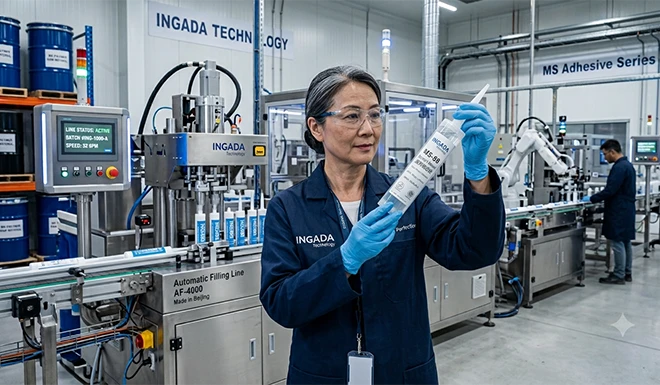
Introduction & Supply Chain Pain Points
For procurement directors, distributors, and construction material specifiers, sourcing chemical adhesives—whether MS Polymer, silicone, or polyurethane—carries substantial commercial risk. One of the most costly missteps in international procurement is unwittingly partnering with a trading company or middleman operating under the guise of a direct OEM factory.
While trading companies play a legitimate role in small-lot sourcing, they introduce critical vulnerabilities to B2B supply chains:
- Margin Stacking & Cost Inefficiency: Intermediaries inflate unit costs by 20% to 40% without adding technical or manufacturing value.
- Lack of Technical Accountability: When batch failures occur—such as adhesive plasticizer migration, poor skinning time, or low shear strength—trading companies cannot alter polymer chemistry or adjust raw material formulations.
- Unstable Lead Times & MOQ Constraints: Intermediaries rely on external factory schedules, leading to delayed shipments and rigid order minimums during raw material supply swings.
- Regulatory & Batch Traceability Risks: Failure to produce valid Certificates of Analysis (COA), ISO certifications, or direct test documentation can lead to severe legal and compliance issues under local building codes (e.g., REACH, RoHS, ASTM C920).
Distinguishing a true original equipment manufacturer (OEM) from a trading firm requires examining technical parameter matrices, manufacturing assets, and compliance documentation.
Technical Evaluation Matrix & Mechanics Logic
To systematically evaluate prospective adhesive partners, procurement teams should apply a structured audit methodology based on core technical specifications and engineering standards.
1. Industry Standard Hierarchy Table (Nomenclature Hierarchy)
Evaluating a supplier’s understanding of international standards quickly reveals whether they possess true manufacturing expertise:
| Industry Recognized Standard | Standard Core Focus Area | OEM Manufacturer Verification Parameter | Intermediary / Trading Firm Gap |
| ASTM C920 | Standard Specification for Elastomeric Joint Sealants | In-house verification of Movement Capability Classes (Class 25, Class 35, Class 50). | Relies on generic external certificates; unable to adjust modulus or movement capacity per job site specs. |
| ASTM C1184 | Standard Specification for Structural Silicone Sealants | Direct lab testing ensuring tensile strength ≥1.8MPa and dynamic fatigue resistance. | Operates on static datasheets; lacks rheological equipment to verify batch-level structural safety. |
| French VOC A+ | Indoor Air Emissivity & Chemical Safety Certification | Formulation control guaranteeing 100% solvent-free, phthalate-free, and zero-isocyanate purity. | Resells third-party formulations; cannot guarantee zero plasticizer migration or pure resin chemistry. |
2. Physical & Chemical Mechanics Logic (Manufacturer vs. Intermediary)
- Low Modulus vs. High Modulus Customization: True manufacturers adjust the silane-terminated polyether polymer structure to alter modulus characteristics. For high-movement precast concrete expansion joints (e.g., Class 35 or Class 50 per ASTM C920), a manufacturer formulates an ultra-low modulus product (e.g., tensile modulus ≤0.4M, elongation ≥600% to prevent adhesive or cohesive failure under cyclical shear stress. Intermediaries can only offer off-the-shelf standard products that may fail under dynamic structural displacement.
- Plasticizer Migration & Staining Control: Inferior sealants use extended white oils or unbonded plasticizers that bleed into natural stone, marble, or porous substrates, causing permanent visual degradation. OEM manufacturers control polymer purity (e.g., 100% pure resin options) and perform long-term stain testing, whereas trading companies lack the analytical tools to monitor plasticizer migration.
- Cure Kinetics & Rheology Customization: Direct manufacturers tailor skinning times (e.g., 15–45 minutes) and extrudability based on target regional climates—whether high-humidity tropical zones or freeze-thaw temperate zones. Trading companies supply static, single-climate formulas regardless of destination requirements.
Frequently Asked Questions (FAQ)
Q1: What specific red flags indicate a supplier is a trading company, not a real factory?
A: Key warning signs include:
- Unwillingness to show real-time video audits: Reluctance to conduct live video tours showing automated compounding reactors, automated cartridge-filling lines, or quality control laboratories.
- Overly broad SKU varieties without core focus: Claiming to produce vastly different chemical lines (e.g., solvent cements, epoxy, silicone, and PU foam) without dedicated production facilities or distinct technical data sheets (TDS).
- Inconsistent Certificate of Analysis (COA): Inability to supply batch-specific COAs matching exact lot numbers on shipped cartridges.
Q2: How does working directly with an OEM sealant manufacturer affect lead times and pricing flexibility?
A: Partnering directly with an OEM factory eliminates third-party markups, typically reducing unit FOB pricing by 30% to 40% compared to European or reseller-marked-up brands. Operationally, direct OEMs maintain raw material safety stock, supporting rapid lead times (e.g., standard production in 2–3 weeks vs. 6–8 weeks through agents) and allowing custom private-label packaging options.
Q3: Why is REACH, RoHS, or French VOC A+ compliance crucial for private label imports?
A: Building regulations in Europe, North America, and parts of Asia require strict indoor air quality and chemical toxicity compliance. Uncertified products containing prohibited phthalates, organotins, or high Volatile Organic Compounds (VOCs) can be seized at customs or banned from commercial tenders. Direct OEM manufacturers maintain strict ISO 9001 quality systems and supply authentic, traceable compliance documents (REACH, RoHS, French VOC A+, FDA) for smooth regulatory clearance.
#SupplyChain #Procurement #AdhesiveIndustry #MSPolymer #PrivateLabel #OEMManufacturing #BuildingMaterials
Discover more from INGADA The Ultimate Bonding Expert
Subscribe to get the latest posts sent to your email.