HOW MS Polymer Sealants Helped Seal a FIFA World Cup Stadium in Qatar’s Desert Heat

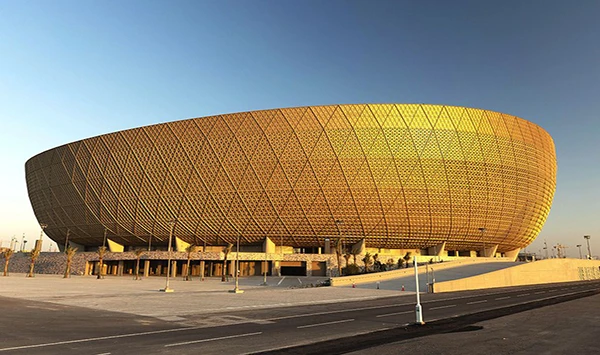
When China Railway Construction Corporation (CRCC) took on the Lusail Iconic Stadium as Design-Build General Contractor for Qatar 2022 — the highest-specification FIFA venue in history — the desert climate demanded far more than standard construction sealants. INGADA MS Polymer and weatherproof sealant systems delivered where conventional products fail.
Why Standard Sealants Cannot Survive Qatar’s Conditions
The Lusail Iconic Stadium is not a typical build. With a seating capacity of 92,000 and broadcast exposure to over five billion viewers worldwide, no failure was permissible — least of all joint failure on the architectural facade.

Doha’s outdoor environment pushes construction chemistry to its absolute limits:
- Extreme thermal cycling. Direct sun drives concrete surface temperatures above +80°C. Air-conditioned interiors cool dramatically. Expansion joints must accommodate continuous thermal movement — daily, seasonally, for decades.
- Wind-driven sand abrasion. Fine silica particles attack joint surfaces, accelerating adhesion breakdown and cohesive failure in conventional sealants.
- High-movement prefabricated structures. The stadium’s modular prefabricated facade panels generate joint displacements demanding ISO 11600 Class 35 or Class 50 performance — or joints begin to crack within months.
- No-stain requirement. Plasticizer migration from budget sealants discolours light-coloured facade cladding. On a landmark structure seen by billions, that is simply not acceptable.
Traditional silicone weatherproof sealants rated at Class 20 (±20%) routinely debond under these dynamic thermal and structural loads. The specification gap between “standard construction grade” and “project-grade” on landmark infrastructure is wider than most procurement teams realise.
Technical Comparison: INGADA vs. Standard Solutions
| Parameter | Standard Silicone (Class 20) | INGADA MS-635 | INGADA SR-35 / SR-50L |
| Movement Capacity | ±20% | ±35% | ±35% / ±50% |
| Tensile Modulus | 1.0 MPa (High stress) | 0.4 MPa (Ultra-Low) | Ultra-Low Modulus |
| Fatigue Cycles Tested | ~1,000 cycles | 5,000 cycles | SGS Verified |
| Temperature Range | −20°C to 80°C | −40°C to 90°C | −50°C to 150°C (SR-50L) |
| UV Resistance | 1,000 hours | 3,000 hours, zero yellowing | SGS Grade A |
| Plasticizer Migration | Present in budget | Zero — solvent-free | 100% white-oil-free |
| Compliance | ASTM C920 only | REACH + RoHS + SGS + French A+ | ASTM C920 Class 35/50, CE, SGS |
Solution & Product Models
INGADA MS-635 — Ultra-Low Modulus Expansion Joint Sealant
Applied to prefabricated concrete panel joints throughout the stadium structure. At 0.4 MPa tensile modulus and ±35% movement capacity — validated through 5,000 thermal fatigue cycles — MS-635 is the primary choice for high-movement construction joints under simultaneous thermal stress and structural load. Its solvent-free, zero-plasticizer formulation eliminates facade staining risk entirely. ingadabondpro.com/product/ms-635/
INGADA SR-50L — Silicone Weatherproof Sealant Class 50
Specified for the unitised curtain wall and architectural facade cladding systems. Class 50 (±50%) movement accommodation, a −50°C to 150°C service range, and a 100% white-oil-free formula ensure the stadium’s finished surfaces survive Qatar’s intense solar radiation and day-night thermal cycling over the full building lifetime. ingadabondpro.com/product/sr-50l/
INGADA MS-55 — High-Strength Structural Adhesive (≥3.7 MPa)
Used in structural bonding assemblies for metal and composite cladding panels where rigid, creep-resistant connections are required under sustained load. With 50,000+ tons of annual production capacity from INGADA’s dedicated manufacturing facility, project-volume supply was secured without lead-time exposure. ingadabondpro.com/product/ms-55/

Regulatory Compliance
- REACH & RoHS Compliance — EU chemical safety standards, adopted under Qatar’s QCS 2014 construction code
- CE Marking — confirmed construction product performance under the EU Construction Products Regulation
- SGS Third-Party Verification — independent performance validation for high-stakes infrastructure
- French A+ Indoor Air Quality Certification — zero plasticizer and solvent-free formulations protecting worker and spectator safety inside a fully climate-controlled stadium
FAQ:
Q1: Can MS Polymer sealants perform in Qatar’s 50°C+ outdoor temperatures?
INGADA MS-635 is rated −40°C to 90°C with 3,000-hour UV resistance and zero yellowing. SR-50L extends to −50°C to 150°C. Both are specified for Middle East climate zones and tropical high-UV environments.
Q2: What movement class is required for prefabricated stadium construction joints?
Large-span prefabricated panel joints typically require ISO 11600 Class 35 or Class 50. INGADA MS-635 (±35%) and SR-50L (±50%) exceed these thresholds with 5,000-cycle fatigue certification — providing a significant safety margin.
Q3: How do I verify INGADA’s supply capacity for large infrastructure projects?
INGADA operates a dedicated factory in Pinggu District, Beijing, with 50,000+ tons annual production capacity. SGS-verified quality systems support bulk project procurement for EPC contractors, specification architects, and international project managers.Learn more: ingadabondpro.com/products
#IndustrialAdhesives #MSPolymer #ConstructionChemicals #CurtainWall #InfrastructureProjects #INGADA #QatarConstruction
Discover more from INGADA The Ultimate Bonding Expert
Subscribe to get the latest posts sent to your email.