The Definitive Curtain Wall Sealant Selection Guide

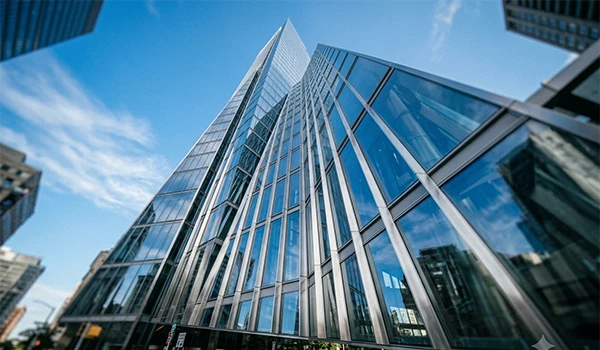
Curtain wall systems are the primary defense mechanism for modern high-rise building envelopes. Tasked with managing extreme wind loads, thermal expansion, seismic displacement, and severe weather, the selection of facade sealants is a high-stakes engineering decision. Choosing an incorrect formulation leads to air leakage, water infiltration, structural degradation, and costly remediation projects. This guide breaks down the critical selection criteria for structural glazing and weatherproof joints, comparing traditional silicone and modern MS Polymer technologies.
The Challenge of Facade Joints
The primary challenge in curtain wall design is accommodating continuous, multi-directional movement without adhesive or cohesive failure. Weatherproof expansion joints must handle thermal joint opening and closing, building drift, and seismic sway. Traditional silicone sealants offer excellent UV resistance, but their low tear strength and potential to bleed plasticizers make them highly risky when sealing porous natural stone cladding or sensitive composite panels. Furthermore, structural glazing demands incredible tensile strength and deep-section curing capabilities that cannot be compromised.
Technical Selection: Structural vs. Weatherproof
| Structural Glazing(Holds Glass to Frame) | Weatherproof Sealing(Seals Out Air & Water) |
| High Tensile Strength | High Movement Class |
| Rigid/Semi-Rigid | Dynamic Elasticity |
| Primerless / 2K Systems | Non-Staining & Paintable |
| UV & Shear Resistant | UV & Climate Stable |
To optimize facade integrity, engineers must divide their selection process into two core functional categories:
1. Structural Glazing Sealants (SSG)
Structural sealants physically bond glass panels to metal support frames, meaning they must withstand constant dynamic shear and tension.
- 1-Component Systems: Solutions like INGADA SR-100 conform to ASTM C1184 and GB 16776 standards, delivering a robust tensile strength of ≥1.8 MPa and wide-temperature stability from -40°C to 150°C.
- 2-Component Systems: For fast-paced, humidity-independent factory assembly lines, a deep-cure system like INGADA SR-102 (10:1 mix ratio) delivers a tensile strength of ≥2.0MPa with a controlled cure time of 30–60 minutes.
2. Weatherproof Joint Sealants
These sealants fill the expansion gaps between glass, metal, and concrete facade panels to block air and moisture.
- For Glass & Metal Facades: High-movement silicone like INGADA SR-50L offers a Class 50 (±50%) movement capability and remains functional in extreme climates from -50°C to 150°C.
- For Natural Stone & Precast Concrete: To completely eliminate oil bleeding and staining on porous granite, marble, or precast concrete, engineers specify low-modulus, non-staining MS Polymers like INGADA MS-635 or MS-650. These deliver seismic-tested fatigue resistance validated up to 5,000 cycles.
Selector Table: Curtain Wall Sealant Applications
| Facade Material / Joint Type | Recommended Sealant | Technology | Movement Class / Performance | Key Standards |
| Glass Curtain Wall SSG | Wall SSGINGADA SR-100 (1K) | Silicone | Tensile Strength: ≥1.8 MPa | ASTM C1184 / GB 16776 |
| Unitized Factory Assembly | INGADA SR-102 (2K) | Silicone | Tensile Strength: ≥2.0MPa | ASTM C1184 / ETAG 002 |
| Super-Tall Metal Facades | INGADA SR-50L | Silicone | Class 50 (±50%) movement | CE / ASTM Specifications |
| Natural Stone Facades | INGADA MS-635 | MS Polymer | Class 35 (±35%), Non-Staining | ASTM C920 / China Green |
| Concrete Precast Facades | INGADA MS-650 | MS Polymer | Class 50 (±50%), Paintable | ASTM C920 / GB/T 14683 |
FAQ
- Q: Why can’t I use structural silicone on natural stone cladding joints?
- A: Structural silicone is designed to support structural glass loads, not to handle stone expansion. More importantly, traditional silicones bleed plasticizing oils into porous stone, causing permanent staining and dark outlines that attract dirt. Low-modulus, non-staining MS Polymers must be used instead.
- Q: When should I choose a 2-part (2K) structural sealant over a 1-part (1K) sealant?
- A: Use a 2K sealant (like SR-102) for factory-fabricated unitized curtain wall systems where fast cure times are needed to move panels off the production line quickly. Use a 1K sealant (like SR-100) for onsite installations, field glazing, or joint repair work where mixing equipment isn’t practical.
- Q: How does climate affect curtain wall sealant performance?
- A: In hot/arid climates, high UV exposure degrades inferior polymers. In cold regions, sealants must maintain flexibility at sub-zero temperatures (-40°C or -50°C) to prevent cracking under ice loads. Premium silicones and MS Polymers are specifically formulated to withstand these local environmental extremes.
Sealing a curtain wall requires balancing high-load structural adhesion with highly elastic, weather-resistant joints. Standardizing on specialized solutions like INGADA’s SR Structural Series and MS Weatherproof Series ensures compliance with rigorous international standards while providing custom, non-staining, or rapid-curing properties. By choosing the exact formulation matched to your facade substrate, you minimize architectural degradation and dramatically lower lifetime maintenance costs.
#FacadeEngineering #CurtainWall #StructuralGlazing #BuildingEnvelopes #ArchitecturalDesign #B2BSupplyChain
Discover more from INGADA The Ultimate Bonding Expert
Subscribe to get the latest posts sent to your email.