How to Prepare an OEM or Private Label Inquiry for Construction Adhesives

Quick Answer
An OEM or private label inquiry that gets a precise answer within a day has eight fields filled in. An inquiry that gets “please send more details” has three.
The eight:
- Product basis — an existing model, or a new formulation.
- Format and pack size — cartridge, foil sausage, pail; 300 mL or 600 mL.
- First order and annual volume — in packs, per model, per colour.
- Artwork readiness — label design, languages, barcode, and who supplies print files.
- Market and documents — destination country and the declarations it requires.
- Claims — what you intend to print, so nothing is claimed that cannot be supported.
- Commercial frame — Incoterm, port, payment structure.
- Timeline — when the product must be on shelf, not just when it should ship.
Nothing on that list is difficult. Missing any one of them usually costs a week of email.
1. Decide the Product Basis First
There are three starting points, and they have different costs and timelines:
| Basis | What it means | Implication |
|---|---|---|
| Existing model, your label | A current production product, packed and printed under your brand | Fastest route; specifications already documented |
| Existing model, modified | Colour, pack size or minor property adjustment | Requires sampling and a short approval loop |
| New formulation | A product developed for your requirement | Development time, test plan and a volume floor |
Write the basis in the first line of the inquiry. The current range of models that can be private-labelled is listed under the product categories. A supplier who does not know which of the three you want cannot price anything — and will usually quote the safest option, which is rarely the one you meant.
The differences between these paths are covered in how to choose between standard supply, private label and custom formulation.
2. Get the Volume Basis Right
Private label and OEM are quoted against quantity, and the quantity that matters is packs per model, not tonnes per year.
Specify:
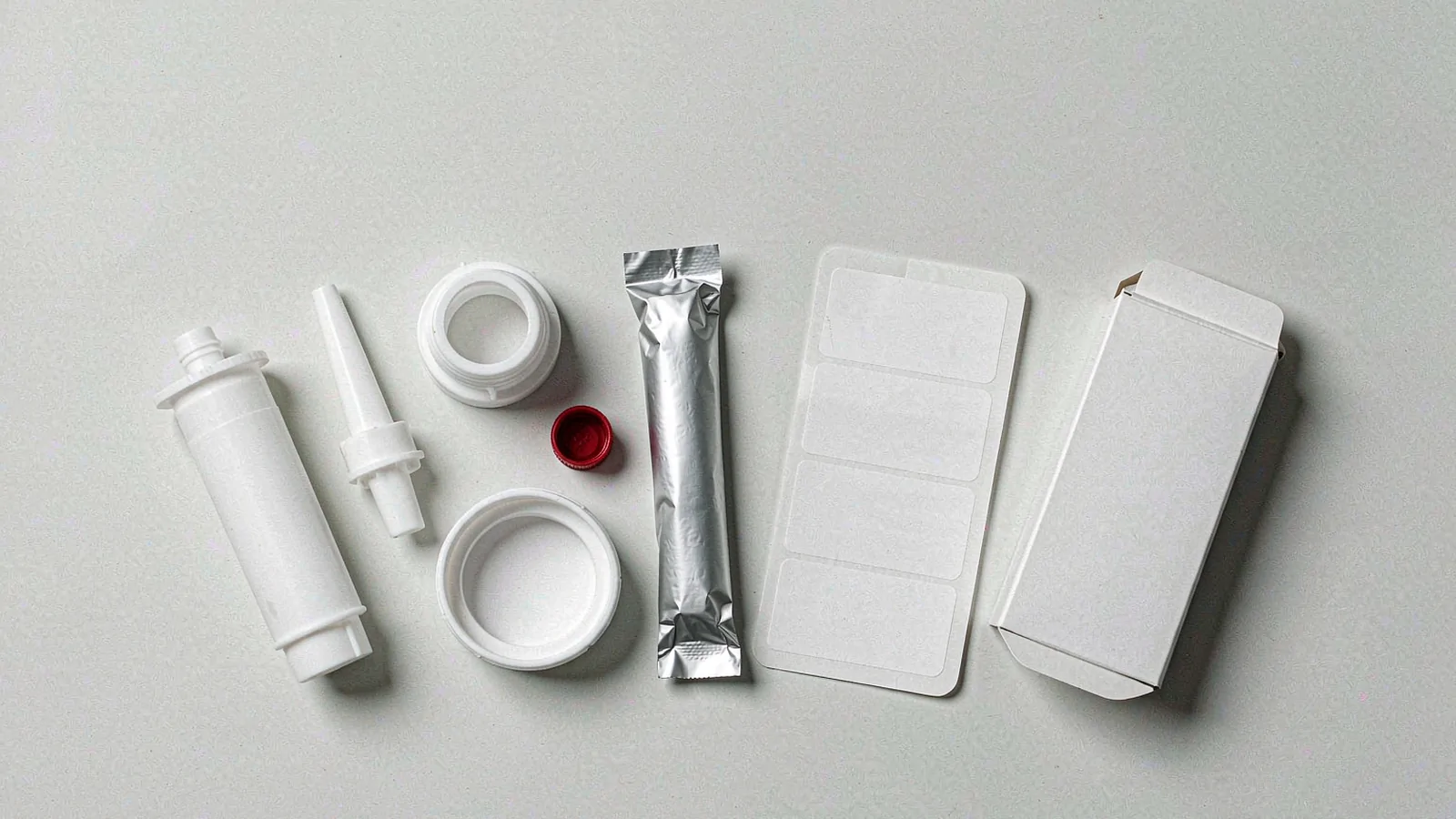
- Format — plastic cartridge, foil sausage, pail or drum. The format determines the filling line and the packaging cost.
- Pack size — for cartridges, 300 mL and 600 mL are different commercial products; for sausages, state the film diameter.
- First order quantity per model, and per colour if colour is part of the plan.
- Annual quantity and order frequency — one large order per year prices differently from twelve monthly orders.
For reference, standard supply in this range starts at 1,920 sausage packs or 3,840 cartridges per model, which is two pallets. Private label carries a higher minimum than standard supply because packaging print runs and plate-making are amortised over the order — ask for the threshold for your specific format rather than assuming it equals the standard minimum.
3. Artwork and Packaging: the Longest Lead Item
Packaging is usually the critical path, not production.
Prepare before asking for a quotation:
- Label dimensions and the panel layout you need (regulatory text, barcode, batch area).
- Languages required on pack, and whether the SDS must be in the same language.
- Barcode — your own GS1 numbers, or the supplier’s.
- Carton artwork — many projects forget the shipper carton, then discover the print lead time at the end.
- Print method — digital or plate. Plate-based printing is cheaper per unit at volume and slower for the first run; that trade-off belongs in the quotation.
The commercial and packaging differences between the two routes are summarised in the OEM and private label overview.
Ask explicitly whether the supplier prints in-house. A supplier who subcontracts label printing has a second lead time you will not see in their production schedule.
4. Market, Documents and Claims
State the destination market and the documents it requires. For outdoor construction products in this range, the compliance set is CE for mechanical performance, ISO 9001 quality system with ISO 11600 product standard, and RoHS. Indoor products carry an additional set including REACH, French A+ and FDA food-contact compliance where applicable.
Then state the claims you intend to print on the label. This protects both sides: a claim that the test evidence does not support cannot be printed, and it is much cheaper to discover that at the artwork stage than after the print run.
If your market requires a national approval, describe the requirement precisely and ask what assistance is available for the application. Approvals are applied for per market; they are not transferred with a product, and a supplier claiming to already hold every national approval should be asked for the certificate numbers.
5. Samples and the Approval Path
Write the approval path into the inquiry, not into the follow-up email:
- Pre-production sample — how many units, in the final packaging or in plain packs.
- Who approves — you, your customer, or a third-party laboratory.
- What is tested — properties, substrate, method.
- Time allowed for the approval round.
A private label project that skips a packaging sample usually ends with a reprinted run. A private label project that skips a functional sample on the actual substrate ends with a technical discussion after installation, which is worse.
6. Commercial Frame and Timeline
See the product categories for the model list a private label project can start from.
Include these four lines so the reply is a quotation rather than a question:
- Incoterm and named port — EXW, FOB or delivered; without it, no price is comparable.
- Payment structure — the standard basis here is 50% deposit with 50% before shipment; say early if your market needs a different structure, because it is a commercial negotiation and it is easier before the specification is fixed.
- Lead time expectation, and when your shelf date is. For a private label first order, plan for longer than standard supply: artwork, plates, packaging samples and then production. Reorders return to something close to the standard lead time.
- Quotation validity — how long the price holds.
State the date the product must be on shelf, not the date it must ship. Suppliers plan production backwards from the shelf date; if you give them the shipping date, the buffer disappears silently.
7. The Inquiry Template
| Section | Fields |
|---|---|
| Product | Basis (existing / modified / new), model code if known, application |
| Format | Cartridge / sausage / pail, pack size, film or cartridge spec |
| Quantity | First order per model, per colour, annual volume, order frequency |
| Packaging | Label size and layout, languages, barcode source, carton artwork |
| Market | Destination country, required documents, national approvals |
| Claims | Wording you intend to print |
| Samples | Quantity, packaging state, approver, tests to be run |
| Commercial | Incoterm, port, payment structure, quotation validity |
| Timeline | Shelf date, sample deadline, order placement target |
Send that as one document, in English, with your artwork files attached as a second. The reply becomes a quotation instead of a request for clarification.
Discuss Your OEM or Private Label Project with INGADA
If you are preparing an OEM or private label inquiry for construction adhesives or sealants, send the eight fields above — product basis, format and pack size, volumes, artwork readiness, market and documents, intended claims, commercial frame and shelf date.
INGADA will confirm the feasible formats, the minimum quantity for your format, the packaging lead time and the documents available for your market, and will flag any claim that would need test evidence first.
Minimum quantities, packaging lead times and document availability are confirmed per format and per market.