ASTM C920 Explained: Everything Engineers, Contractors and Distributors Should Know

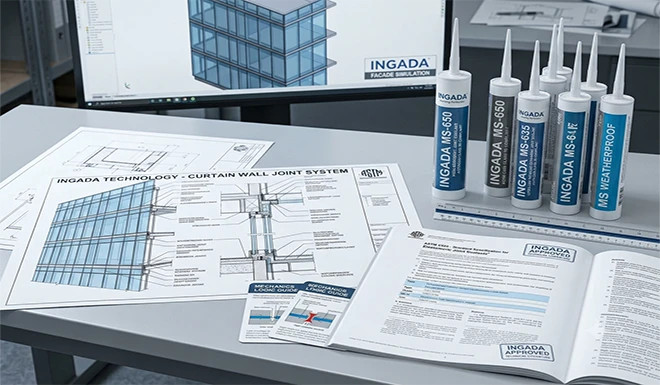
When evaluating construction sealants, one specification appears repeatedly in project documents, technical data sheets and architectural drawings:
ASTM C920.
Many buyers mistakenly assume ASTM C920 is simply another quality certificate. It is not.
Instead, ASTM C920 is one of the world’s most recognized performance standards for elastomeric joint sealants. It establishes how a sealant should perform under movement, weathering, adhesion and durability tests—not what chemistry it uses.
Understanding ASTM C920 helps distributors recommend suitable products, contractors avoid premature joint failure, and engineers select sealants capable of surviving decades of building movement.
This guide explains ASTM C920 in plain language.
What Is ASTM C920?
ASTM C920 is the Standard Specification for Elastomeric Joint Sealants, published by ASTM International.
Rather than specifying silicone, polyurethane or MS polymer chemistry, the standard evaluates performance.
A sealant meeting ASTM C920 has demonstrated acceptable performance through standardized laboratory testing including:
- Joint movement capability
- Adhesion after aging
- Elastic recovery
- Weather resistance
- Durability
- Low-temperature flexibility
- Cyclic movement performance
Because it evaluates performance instead of chemistry, different sealant technologies can comply with ASTM C920 if they pass the required tests.
Why ASTM C920 Matters
Modern buildings constantly move due to:
- Thermal expansion
- Wind loads
- Structural settlement
- Traffic vibration
- Seismic activity
- Material shrinkage
A sealant that cannot accommodate movement eventually experiences:
- cracking
- cohesive failure
- adhesive failure
- water leakage
- façade staining
- costly maintenance
ASTM C920 provides a common engineering language that allows architects and contractors to compare products objectively.
Understanding ASTM C920 Classification
ASTM C920 identifies sealants using four primary categories.
| Category | Meaning | Example |
|---|---|---|
| Type | Number of components | Type S (single-component) |
| Grade | Flow characteristics | Grade NS |
| Class | Joint movement capability | Class 25 / 35 / 50 |
| Use | Intended substrates or applications | Use NT, M, G, A, O |
Type: Single or Multi-Component
Type S
Single-component sealants.
Advantages:
- Ready to use
- No mixing errors
- Faster installation
- Lower labor cost
Common examples include:
- Neutral cure silicone
- MS polymer sealants
- One-component polyurethane
Most construction weatherproof sealants belong to this category.
Type M
Multi-component sealants.
Advantages:
- Controlled curing
- Suitable for factory production
- Preferred in some structural glazing applications
They require accurate mixing before application.
Grade: Non-Sag or Self-Leveling
Grade NS (Non-Sag)
The most common construction grade.
Suitable for:
- Vertical joints
- Curtain walls
- Window perimeters
- Wall joints
- Facades
The sealant remains in place without flowing.
Grade P (Pourable or Self-Leveling)
Designed for horizontal joints.
Typical applications include:
- Parking decks
- Pavements
- Airport runways
- Bridge joints
Class: Movement Capability
The movement class is often the most important specification.
It indicates how much expansion and contraction a cured sealant can tolerate while maintaining adhesion.
| ASTM Class | Joint Movement |
|---|---|
| Class 12.5 | ±12.5% |
| Class 25 | ±25% |
| Class 35 | ±35% |
| Class 50 | ±50% |
| Class 100/50 | Special applications |
Example:
A 20 mm joint using a Class 50 sealant can repeatedly move between:
- 10 mm expansion
- 10 mm compression
without failure.
Higher movement capability generally means longer service life in dynamic joints.
Understanding ASTM C920 Use Designations
The “Use” designation identifies suitable substrates.
| Use | Suitable Materials |
|---|---|
| NT | Non-traffic joints |
| T | Traffic joints |
| M | Mortar |
| G | Glass |
| A | Aluminum |
| O | Other approved substrates |
Many premium construction sealants carry multiple use classifications.
Which ASTM C920 Class Should You Choose?
Class 25
Suitable for:
- Residential windows
- Standard façades
- Interior movement joints
Typical movement:
Moderate.
Class 35
Recommended for:
- Curtain walls
- Commercial buildings
- Large façade systems
- High-rise construction
Offers increased safety against thermal movement.
Class 50
Designed for demanding applications:
- Seismic zones
- Expansion joints
- Super-tall buildings
- Bridges
- Infrastructure
Class 50 sealants provide the highest commonly specified movement capability.
Typical Applications by ASTM C920 Class
| Application | Recommended Class |
|---|---|
| Residential windows | Class 25 |
| Curtain wall perimeter | Class 35 |
| Expansion joints | Class 50 |
| Bridge joints | Class 50 |
| Seismic buildings | Class 50 |
| Precast concrete | Class 35–50 |
ASTM C920 Does Not Specify Chemistry
One common misconception is that ASTM C920 requires silicone.
It does not.
Products meeting ASTM C920 may include:
- Neutral cure silicone
- Polyurethane
- Silane-modified polymer (MS Polymer)
- Hybrid sealants
The standard evaluates performance, allowing engineers to select the chemistry that best suits the project requirements.
Selecting the Right Sealant for High-Movement Buildings
For projects involving large façade movement, infrastructure or curtain walls, movement capability becomes one of the primary selection criteria.
INGADA’s MS Weatherproof Sealant Series includes solutions engineered for demanding movement requirements:
| Product | ASTM Movement Class | Typical Application |
|---|---|---|
| MS-625 | Class 25 | Precast panels, standard expansion joints |
| MS-635 | Class 35 | Curtain walls, bridges, seismic joints |
| MS-650 | Class 50 | Super-tall buildings, major infrastructure, high-movement joints |
These products are designed with paintable, low-VOC, solvent-free MS polymer technology while targeting ASTM C920 performance requirements for weatherproof sealing applications.
Frequently Asked Questions
Is ASTM C920 mandatory?
Many commercial and infrastructure specifications reference ASTM C920 because it provides standardized performance requirements for elastomeric joint sealants. Whether it is mandatory depends on the project specification and local building codes.
Is ASTM C920 better than ISO 11600?
Neither standard is universally “better.” ASTM C920 is widely specified in North America and many international commercial projects, while ISO 11600 is commonly referenced in Europe and other regions. Many premium sealants are tested to both standards.
Does ASTM C920 guarantee long service life?
Compliance indicates that a sealant has passed standardized laboratory performance tests. Actual service life also depends on proper joint design, substrate preparation, installation quality, environmental exposure, and maintenance.
Does ASTM C920 only apply to silicone?
No. Silicone, polyurethane, MS polymer and other elastomeric sealants can all comply with ASTM C920 if they meet the required performance criteria.
Final Thoughts
ASTM C920 is more than a certification—it is a performance benchmark that helps engineers, contractors and distributors compare sealants on objective criteria such as movement capability, adhesion and durability. By understanding the standard’s Type, Grade, Class and Use classifications, specifiers can select products that match the real movement demands of façades, expansion joints and infrastructure.
For high-movement construction projects, choosing a sealant with the appropriate ASTM C920 class can significantly reduce maintenance risks and extend the service life of the joint.
#StructuralEngineering #BuildingEnvelope #ASTM C920 #MSPolymer #CurtainWall #ConstructionSupplyChain #INGADA
Discover more from INGADA The Ultimate Bonding Expert
Subscribe to get the latest posts sent to your email.